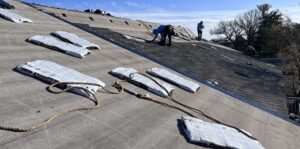

The most important roof maintenance you can do in the Twin Cities happens in the fall, before the first hard freeze. A short seasonal checklist — inspect the shingles, clear the gutters, check the attic, and seal any weak points — is what stops a small, cheap issue from turning into a winter emergency once snow and ice arrive.
Minnesota roofs take more punishment than roofs in almost any other part of the country. Between summer hail, autumn winds, and months of freeze-thaw cycles, the gap between a roof that’s ready for winter and one that isn’t comes down to a few hours of preparation in September and October. This checklist walks through exactly what to look at, why it matters here, and when to call a professional.
Why does fall roof maintenance matter so much in Minnesota?
Minnesota’s climate ages roofs faster than milder regions. Freeze-thaw cycles, ice dams, and heavy snow load can shorten a roof’s usable life by several years, and small problems left unaddressed in the fall almost always get worse over winter. Water that seeps into a hairline crack in October freezes, expands, and widens that crack every single night until spring.
The National Roofing Contractors Association recommends inspecting your roof at least twice a year — ideally in the spring and the fall — precisely because catching damage before a harsh season is far cheaper than repairing the aftermath. In the Twin Cities, the fall inspection is the one that protects you through the months when getting anyone up on an icy roof is difficult and expensive.
Fall is also your last comfortable working window. Once temperatures drop, asphalt shingles become brittle and sealant won’t cure properly, so repairs that are simple in September become risky or impossible in January.
What should be on your fall roof maintenance checklist?
Work through these items in order. Anything you can’t safely see or reach from the ground is worth a professional set of eyes.
- Inspect the shingles. Look for cracked, curled, loose, or missing shingles, and for bare spots where the protective granules have worn away. Granule loss is a common aftereffect of summer hail and it accelerates aging.
- Check the flashing and sealant. The metal flashing around chimneys, vents, and skylights is where most leaks start. Look for lifted edges, rust, or dried-out caulk.
- Clean the gutters and downspouts. Clogged gutters can’t move meltwater away from the roof edge, which is a direct cause of ice dams. Make sure water flows freely and drains away from the foundation.
- Look at the attic. From inside, check for daylight coming through the roof deck, water stains, damp insulation, or frost on the underside of the sheathing. These are early warnings you’d never see from outside.
- Confirm ventilation is clear. Blocked soffit or ridge vents trap warm, moist air in the attic — the exact condition that melts snow unevenly and forms ice dams.
- Trim overhanging branches. Limbs that rub the roof in a windstorm strip granules and can puncture shingles under a snow load.
If you’d rather not climb a ladder, a professional roof repair team can complete this entire checklist safely and document anything that needs attention.
How do you prevent ice dams before winter?
Ice dams form when heat escaping through the attic melts snow on the upper roof, and that meltwater refreezes at the colder eaves, backing water up under the shingles. Preventing them is an attic-and-ventilation job, and fall is the time to do it.
Three moves make the biggest difference. First, make sure attic insulation is deep and even so household heat stays in the house, not in the roof deck. Second, keep soffit and ridge vents unobstructed so cold air can flush the attic and keep the roof surface a uniform temperature. Third, clear the gutters so the first meltwater actually drains instead of pooling and freezing.
Homeowners in Blaine and across the north metro see ice dams every year, and the ones who prep their attic and ventilation in the fall almost always avoid the interior water damage that follows a bad dam. If your home has a history of ice dams, address it now rather than after the first thaw.
What roof damage should you look for after a Minnesota summer?
By fall, your roof has already survived a full season of Twin Cities storms — and summer storm damage is often invisible from the ground. Golf-ball-sized hail is not unusual in Minnesota, and it can bruise shingles or scour off the granular layer that protects them from UV and moisture, even when the roof still looks intact.
Wind is the other culprit. A single gust can lift or crease shingles just enough to break their seal, and once that seal is broken the next storm peels them back. Look specifically for shingles that appear slightly raised, dark bruise marks, dented gutters or vents, and granules collecting at the bottom of downspouts.
If a storm rolled through your area this year, it’s worth having a storm damage inspection before winter. Documented damage is also far easier to file an insurance claim on in the fall than after months of snow have covered the evidence.
Should you clean your own gutters or hire a pro?
Gutter cleaning is the one fall task most homeowners can handle themselves — if you’re comfortable and safe on a ladder. Remove leaves and debris, flush the system with a hose, and confirm every downspout carries water well away from the foundation.
That said, gutters do more than shed rain. In a Minnesota winter they’re the first line of defense against ice dams, so they need to be both clean and structurally sound heading into the season. If your gutters sag, leak at the seams, or pull away from the fascia, cleaning alone won’t protect you. Upgrading or repairing gutters in the fall is one of the simplest ways to reduce ice-dam risk before the snow flies.
Homeowners in Maple Grove and similar tree-heavy suburbs often need more than one cleaning through the fall as leaves keep dropping — plan on a final pass after the last leaves are down.
When should you call a roofing professional?
Call a professional any time the checklist turns up something you can’t clearly diagnose or safely reach: active leaks or attic water stains, widespread granule loss, damaged flashing, suspected storm damage, or a roof that’s simply near the end of its expected life. A typical asphalt shingle roof lasts 15 to 30 years, and Minnesota’s climate tends to push real-world lifespans toward the lower end of that range.
A professional fall inspection costs far less than the winter repairs it prevents, and it gives you a documented baseline heading into the hardest months. The goal isn’t to sell you a new roof — it’s to make sure the one you have makes it through another Minnesota winter.
What does a professional fall roof inspection include?
A professional fall inspection goes well beyond a glance at the shingles. When you book one before winter, a good roofer works through a consistent checklist so nothing gets missed heading into the hardest season.
- Surface condition — a close look at shingles for cracking, curling, blistering, granule loss, and storm bruising, plus the condition of ridge caps.
- Flashing and penetrations — the seals and metal around chimneys, vents, skylights, and valleys, which is where the majority of leaks begin.
- Gutters and drainage — whether water actually moves off the roof and away from the foundation, and whether the gutters are sound enough for winter.
- Attic and ventilation — insulation depth, airflow, and any signs of moisture, staining, or daylight through the deck.
- Structural check — any sagging, soft spots, or decking concerns that could worsen under snow load.
You get a documented condition report you can act on, which is far more useful than guessing from the ground — and it becomes a baseline if you need to file a storm claim later.
Does attic ventilation really affect your roof?
Attic ventilation is one of the most overlooked factors in how long a Minnesota roof lasts. Balanced intake and exhaust airflow keeps the attic close to the outside temperature, which is exactly what prevents the uneven snowmelt that causes ice dams — and it lets moisture escape instead of rotting the roof deck from underneath.
A common industry guideline is roughly one square foot of net free vent area for every 150 square feet of attic floor, split between intake (soffit) and exhaust (ridge) vents. Blocked soffit vents — often buried under insulation — are a frequent culprit here, and they’re easy to correct in the fall.
If your home has recurring ice dams, high winter energy bills, or a roof that ages faster than it should, ventilation is one of the first things worth checking before winter sets in.
Fall Roof Maintenance FAQ
How often should I inspect my roof in Minnesota?
At least twice a year — spring and fall — as recommended by the National Roofing Contractors Association. In Minnesota the fall inspection is the most important one, because it catches damage before winter freeze-thaw cycles can make it dramatically worse.
What is the best month for roof maintenance in the Twin Cities?
September and October. Temperatures are still warm enough for shingles to stay flexible and for sealant to cure properly, and you’re getting ahead of the first snow. Waiting until late fall makes repairs harder and riskier.
Can I do a roof maintenance checklist myself?
You can safely handle ground-level checks, gutter cleaning, and a visual attic inspection. Anything that requires walking the roof, or any suspected storm or structural damage, is worth a professional inspection — both for safety and because trained eyes catch issues the ground can hide.
How do I know if I have ice dam risk?
If you’ve had ice dams before, see icicles forming along the eaves in winter, or have an attic that feels warm, you’re at risk. Poor attic insulation and blocked ventilation are the root causes, and both are best corrected in the fall.
Does fall roof maintenance help with insurance claims?
Yes. A documented fall inspection establishes the condition of your roof before winter, which makes it easier to identify and file storm-related claims. Damage is also far simpler to spot and photograph before snow covers the roof.
Get your roof winter-ready — call Four Point Construction at (612) 699-4444 to schedule your fall inspection across the Twin Cities.