
There’s a question that comes up in nearly every roofing conversation in the Twin Cities, and it goes something like this: “Should I go with metal or just stick with asphalt shingles?” It sounds simple. It isn’t. Both are legitimate options. Both have real strengths. And the right answer depends on your home, your budget, your timeline, and honestly — how long you plan to stay in the house.
What makes this question interesting in Minnesota specifically is that our climate doesn’t let either material off easy. We’re talking about roofs that face sub-zero temperatures, heavy snow loads, hail events, ice dams, and summer heat all within the same twelve-month stretch. That context matters when you’re making a decision that’s going to live above your family for the next two or three decades.
This guide breaks down both options clearly and honestly — no hype, no sales pressure, just the information you need to make a smart call.
Key Takeaways:
- Both metal roofing and asphalt shingles are well-suited for Minnesota’s climate when properly installed
- Metal roofing costs more upfront but typically lasts two to three times longer than asphalt
- Asphalt shingles offer lower initial cost, wide availability, and strong performance for most residential applications
- The right choice depends on your budget, long-term plans, and specific home characteristics
- Four Point Construction installs both and can help you determine which makes the most sense for your home
How Do Metal Roofing and Asphalt Shingles Actually Differ?
They’re both roofing materials — but they work differently, last differently, and cost differently in almost every way.
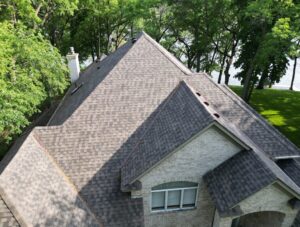
Asphalt shingles are the most common residential roofing material in the United States by a wide margin. They’re made from a fiberglass mat coated in asphalt and topped with mineral granules. They’re relatively straightforward to manufacture, easy to install, and available in a huge range of colors and styles. Most homes you drive past in the Twin Cities have asphalt shingles on them right now.
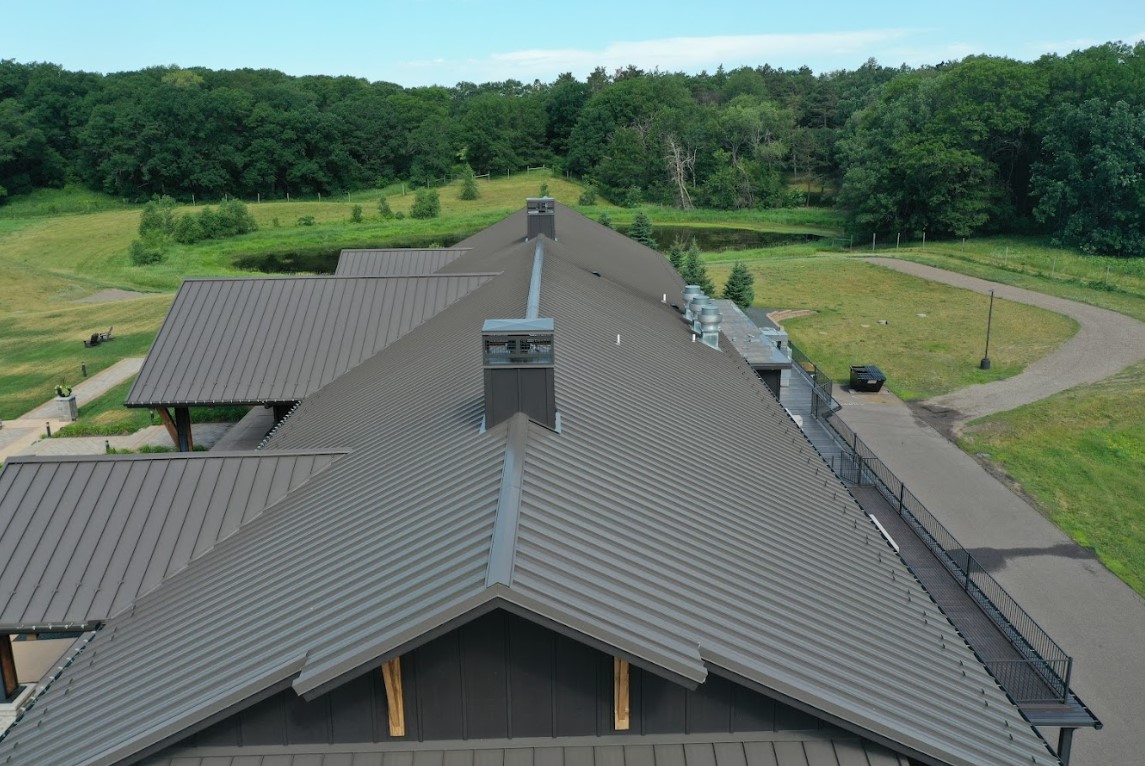
Metal roofing, on the other hand, comes in several forms — standing seam panels, metal shingles, and corrugated options among them. Steel and aluminum are the most common metals used in residential applications. Metal roofing has been a staple of commercial and agricultural construction for decades, but it’s moved steadily into the residential market over the last twenty years as the products have improved and homeowners have started thinking longer-term about their investment.
The core difference between the two comes down to this: asphalt shingles offer strong performance at a lower upfront cost, while metal roofing offers superior longevity and certain performance advantages at a significantly higher initial price. Everything else flows from that fundamental trade-off.
Which Roofing Material Holds Up Better in Minnesota Winters?
Both can handle Minnesota weather — but they handle it in different ways, and the details matter.
Minnesota winters are genuinely tough on roofing materials. The freeze-thaw cycle is the biggest culprit. Water infiltrates small cracks or gaps, freezes and expands overnight, and slowly forces those gaps wider. Ice dams form along eaves when heat escapes from the living space, melts snow on the upper roof, and that melt water refreezes at the colder edge. Wind and hail add their own categories of damage on top of all that.
Metal roofing handles several of these challenges exceptionally well. Its hard surface resists hail impact better than asphalt, and its smooth profile sheds snow more efficiently — reducing the load that builds up on the roof structure. Metal doesn’t absorb water, so the freeze-thaw cycle that degrades asphalt over time has significantly less effect on it. According to the Metal Roofing Alliance, metal roofs can last 40 to 70 years with proper installation and maintenance, compared to the 20 to 30 year lifespan typical of quality asphalt shingles.
Asphalt shingles are not helpless in Minnesota weather — not by a stretch. Modern architectural shingles are significantly more durable than the three-tab shingles of earlier generations. High-quality asphalt products rated for impact resistance can hold up well to hail, and proper installation with good underlayment and ventilation addresses a lot of the vulnerability that shorter-lived asphalt roofs typically suffer from. The key word there is “proper” — which is why who installs your roof matters as much as what they install.
What Does Each Roofing Option Actually Cost in Minnesota?
The price difference is real and significant — but so is the difference in how long each material lasts.
Here’s where a lot of homeowners get tripped up. They look at the upfront cost of metal versus asphalt and immediately lean toward asphalt without running the full numbers. That’s understandable. Metal roofing can cost two to three times more per square foot than asphalt shingles depending on the product and complexity of the installation. On a typical Minnesota home, that’s a meaningful dollar difference.
But here’s the math that changes the conversation:
- A quality asphalt shingle roof might last 25 years with proper maintenance before needing full replacement
- A metal roof on the same home might last 50 years or more — meaning you’d replace the asphalt roof at least once during the metal roof’s lifetime
- Add in the cost of that second asphalt replacement, plus maintenance over time, and the lifetime cost difference narrows considerably
- Metal roofing can also improve energy efficiency, as reflective metal surfaces reduce heat absorption in summer — which matters for cooling costs
That said, if your budget requires keeping the upfront cost lower, or if you’re not planning to stay in the home long-term, asphalt shingles are a completely sound investment. A well-installed asphalt shingle roof from a quality contractor with quality materials will serve a Minnesota home well for decades.
Are There Homes Where One Option Clearly Makes More Sense Than the Other?
Yes — and it comes down to a few specific factors that are worth walking through honestly.
Not every home is an equal candidate for both materials. Here are the situations where one option tends to make more practical sense than the other:
Metal roofing tends to be the stronger choice when:
- You’re planning to stay in the home long-term and want a last-lifetime roof
- Your home has a low-slope or complex roof profile where snow shedding is a specific concern
- You’ve had repeated issues with ice dams and want a surface that contributes to the solution
- Energy efficiency is a priority and you want a roof that reflects heat rather than absorbing it
- You’re willing to invest more now to avoid the cost and disruption of replacement in 25 years
Asphalt shingles tend to be the stronger choice when:
- Budget is the primary constraint and you need quality performance at a lower entry point
- You’re planning to sell the home within the next several years and want a clean, universally appealing roof
- Your roof structure or current design is optimized for shingle installation
- You want the widest possible range of color and style options to match your home’s exterior
The honest answer is that neither option is universally better. Metal roofing wins on longevity and certain performance metrics; asphalt wins on upfront cost and flexibility. A contractor who tells you definitively that one is always the right answer — regardless of your situation — isn’t giving you the full picture.
What Does Installation Look Like for Each Material in Minnesota?
The installation process differs in important ways, and those differences affect your timeline and your home.
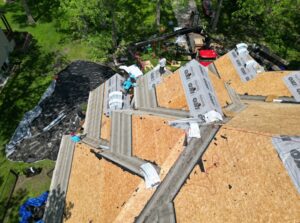
Asphalt shingle installation is a well-established process that most experienced roofing crews can complete on a typical home in one to three days. The materials are widely available, the techniques are standardized, and a good crew can work efficiently. It’s also more weather-flexible — while ideal conditions still apply, asphalt installation has a broader workable temperature range during the installation day itself.
Metal roofing installation requires more specialized knowledge and tools. Standing seam metal in particular involves precise panel fitting, specific fastening systems, and details around flashing and penetrations that differ meaningfully from shingle work. This is one of the reasons it’s genuinely important to work with a contractor who has real experience with the material — not just someone who handles shingles and has done a couple of metal jobs. According to the National Roofing Contractors Association, improper installation is one of the leading causes of early roof failure regardless of the material used, and that’s especially true for metal.